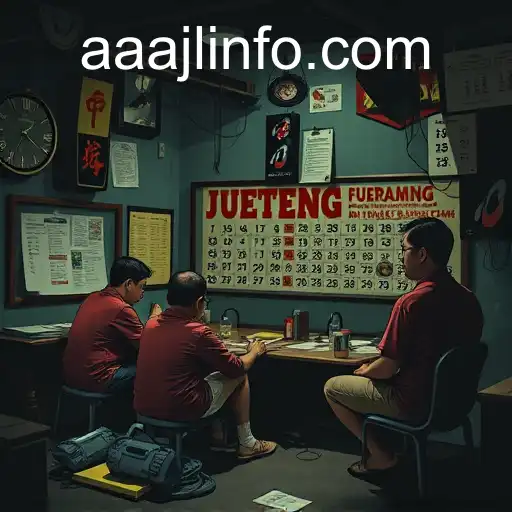
Jueteng: The Underground Lottery with Deep Roots
Jueteng is an illegal numbers game deeply embedded in the cultural and economic fabric of the Philippines. Despite its illegal status, it has maintained a strong foothold in various communities, often operating openly under the radar of authorities. The term 'Jueteng' traces its origins to the Chinese words 'hue' (flower) and 'teng' (bet), encapsulating its essence as a gambling activity.
The Historical Context of Jueteng
The roots of Jueteng date back to the Spanish colonial period when the game began to capture the fascination of Filipinos. Initially introduced by Chinese migrants, the game quickly adapted within local communities, becoming a cultural mainstay. Over the decades, its simplicity and apparent promise of instant wealth attracted a wide following, enabling its growth to unparalleled levels.
How Jueteng Operates
Understanding Jueteng requires insight into its operational structure. The game revolves around a seemingly simple bet on a set of numbers, chosen by the player. Bets vary from low to high amounts, catering to both low-income individuals and high-stakes players.
Central to the operation is the "cobrador," the individual responsible for collecting bets from players. Acting as the public face of the operation, cobradores canvass neighborhoods, ensuring the game's reach is extensive. Behind the scenes, organizers known as "kubrador" handle the logistics, from managing betting pools to communicating outcomes to players. This intricate network underscores the game's pervasive nature.
The Economic Dynamics of Jueteng
One of the key appeals of Jueteng is its economic impact on communities. In areas faced with economic hardships, the game provides a source of income for those involved in the operation. For players, it offers an accessible, albeit risky, opportunity for financial gain. The perceived economic benefits, however, are fleeting, often leading to financial distress for those who consistently gamble without success.
Jueteng's economic influence extends beyond mere gambling; it contributes to a shadow economy where revenues and profits flow unchecked by government regulation. This unregulated financial activity presents challenges to economic stability and governance efforts aimed at formalizing and taxing economic transactions.
Cultural Significance and Public Perception
Besides economic implications, Jueteng holds cultural significance in Filipino society. It is often perceived as a social equalizer, accessible to all, regardless of socioeconomic status. Family and social ties may influence participation, as family members and friends often become cobradores, further entrenching Jueteng within community dynamics.
Despite its illegal status, public perception of Jueteng is nuanced. Many Filipinos view it as a harmless traditional pastime, skeptical of the government's capacity to provide alternative formal employment and economic opportunities. Authorities' sporadic enforcement against Jueteng has also led to a general public apathy towards its legality and associated risks.
The Role of Authorities and Law Enforcement
Attempts to clamp down on Jueteng have been met with limited success, largely due to its extensive network and the alleged involvement of local officials in protecting operations. Corruption, especially at local levels, undermines law enforcement efforts, allowing Jueteng to thrive discreetly.
Some administrations have pursued particularly aggressive campaigns against Jueteng, linking the game to broader crime syndicates. However, eradicating it remains a herculean task as its societal underpinnings are deeply entrenched and multifaceted.
Jueteng in the Future: Challenges and Opportunities
The future of Jueteng presents significant challenges that require comprehensive approaches and policies. While it's unrealistic to expect a quick resolution, embracing strategies that address its root causes may offer pathways to diminish its prevalence. Empowering citizens through education and alternative livelihood programs may discourage reliance on gambling as a financial cushion.
Reconciling Jueteng with formal economic systems may also necessitate innovative regulatory frameworks, possibly considering partial legalization or integration with government-sanctioned lottery systems. Such strategies would not only help curb illegal activities but also enable the state to gain revenue through taxation.
In conclusion, the story of Jueteng reflects the complex interweaving of tradition, economics, and policy. Its persistence offers insights into deeper societal issues in the Philippines, challenging stakeholders to find solutions that respect cultural realities while advancing socioeconomic prosperity.